


ReelFlow vs YouTube for website video
A YouTube embed is the free, familiar way to put a video on your page. ReelFlow is interactive video that keeps visitors on your site, lets each one choose their own path, and guides them to act. Use YouTube for public reach or long-form content; use ReelFlow to improve site engagement and conversion.
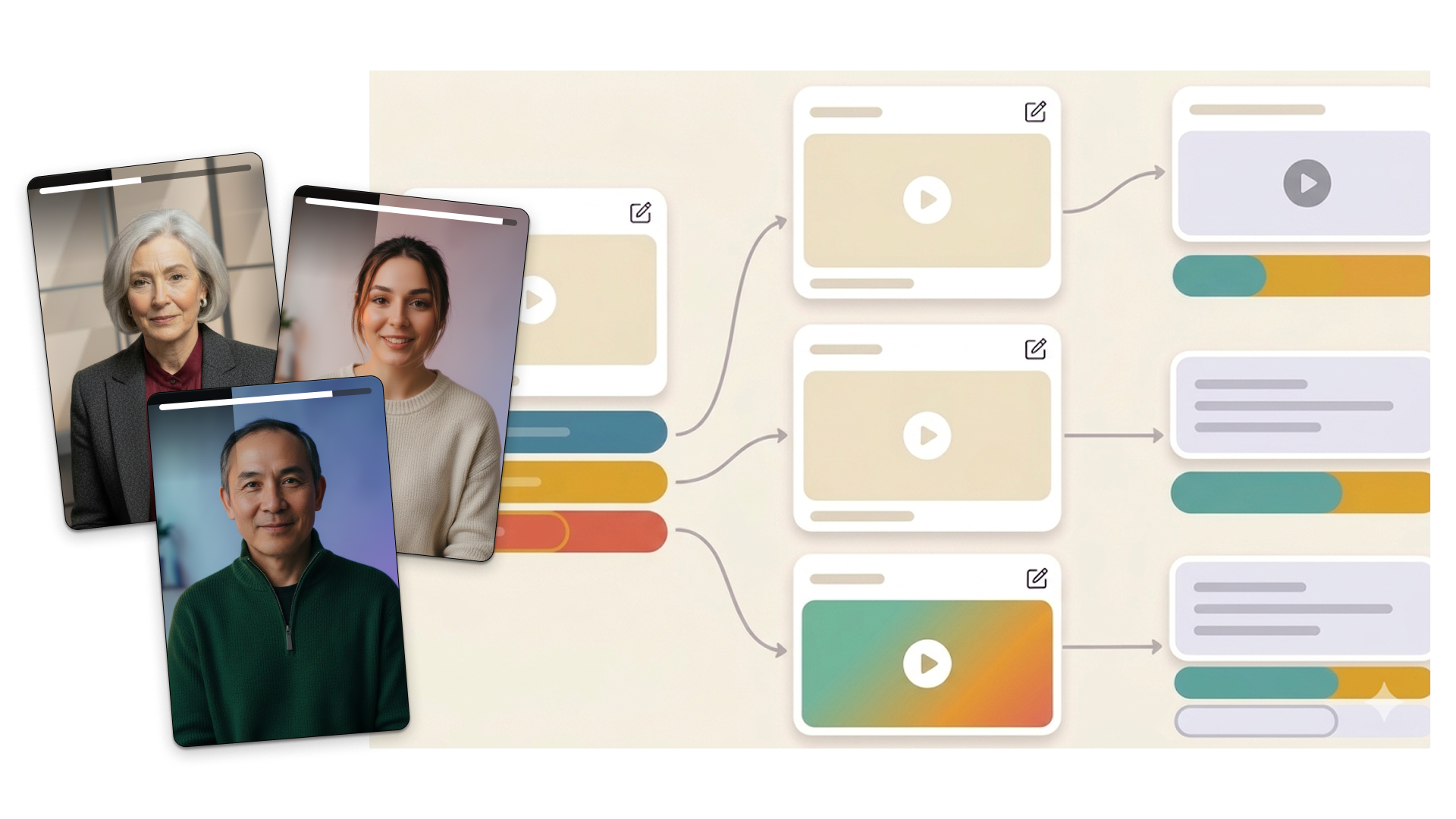
Should you use ReelFlow or YouTube?
Use ReelFlow when the video's job is on the page – engaging a visitor and moving them to act. Use a YouTube embed when the video is really a YouTube video that also happens to sit on your site: there for reach as much as for improve website engagement or conversion. YouTube is also the free and familiar option for most people.
A YouTube embed is the better choice when the video already lives on YouTube for reach and discovery, it's longer-form content people watch end to end – a recorded talk, a webinar, a full walkthrough – and on your site you just need it available to play. It's free, and you're reusing an asset that's already earning its keep elsewhere.
ReelFlow is the better choice when the video has a job to do on the page itself. ReelFlow's interactive, short-form video lets each visitor choose their own path and guides them towards a next step – built for your site, rather than pulled in from a platform built for its own engine.
How do ReelFlow and YouTube compare?
At a glance, YouTube wins on cost and familiarity, and ReelFlow wins on everything about what the video does once it's on your page.
What is the real difference between ReelFlow and YouTube?
The real difference is that a YouTube embed is a single video people watch, while ReelFlow is interactive video people use – they choose to watch the content most suited to them, and every choice tells you what they want.
What it is.
A YouTube embed is a single, linear video – one clip that plays the same way for everyone who lands on it. ReelFlow is interactive, short-form video: a flow of shorter videos the visitor moves through by choosing what they want to see next. It's decision-based – closer to choose-your-own-adventure than press-play.
What it does.
A YouTube embed gets watched. ReelFlow gets used – the visitor taps, chooses and navigates, engaging with the video itself rather than passively sitting through it. It's the difference between an audience that watches and one that takes part. As a result, ReelFlow gives rich engagement metrics so you can understand how visitors are behaving on your site and interacting with your content.
What it's for.
A YouTube embed is built to grow watch time. ReelFlow is built to convert – it routes each visitor to what's relevant, guides them to the next step, and because every choice is a signal, hands you real behavioural intent on what each visitor wants, not just a view count.
Is ReelFlow or YouTube right for you?
ReelFlow is the better fit for websites and landing pages that need to convert; a YouTube embed is fine for public, awareness content you're happy hosting on YouTube.
Event Organisers
Use ReelFlow to guide attendees, sponsors and speakers through a single site with short, human video. ReelFlow has been proven to boost engagement and registrations with organisers like EasyFairs.
Noura Moussa, Head of Marketing, Paris Packaging Week described the why having ReelFlow has been so important for their event marketing: "Our community really appreciate the video because it’s an extra layer where they can really get to know us."
Founder-led and trust-dependent brands
ReelFlow is best when the sale hinges on people trusting people, authentic on-camera video on your own site does the work. Short-form content from your team is a great opportunity to build a human connection during your buyers research phase.
James Ryan, CEO or RocketSaaS, says adding ReelFlow to their site has been valuable in sales conversations: "Multiple people have come onto calls with me and one of the first things they've said is, "Oh, I've seen that video on your website. That's cool!" That's just the best kind of attribution."
Marketing teams converting existing traffic
ReelFlow is best turning visitors who already landed into enquiries orregistrations rather than counting views.
Charlie Taylor-Martin, Marketing Campaigns Manager at Easyfairs, described the shift after adding ReelFlow to their event website: "People weren't just watching the videos, they really were engaging – clicking the buttons, spending longer on our content and exploring more of the website. This translated into more visitors making it through to registration."
A quick, free video on a low-stakes page
YouTube has a place for longer-form tutorial content you just need on the page, where a free embed is the simplest option.

50%
engagement
"The engagement rate is fifty percent. So people are really engaging with our content and with the videos."
Prioritising human connection
"We are in an event industry, so it's really important for us to put the human side at the heart of everything we do. We want our community to connect with us in an emotional way.
The feedback has been extremely positive. Our community really appreciate the video because it’s an extra layer where they can really get to know us."

45s
Increase in time on page
"We have seen the bounce rate go down by 7% and time on our homepage has increased by 45 seconds."
Bringing something new to the table
"Multiple people have come onto calls with me and one of the first things they've said is, "Oh, I've seen that video on your website. That's cool!" That's just the best kind of attribution.
There is nothing better than getting on a sales call with someone where they actually say something to you like, "I found you because of this," or "I like this." That's the best metric I can get in terms of positive signals from the market."

Game
changer
"People don’t buy from businesses, they buy from people. To actually see and hear from the person you’re going to be working with is a total game-changer."
Standing out from the crowd
"The thing that I love the most about ReelFlow is the idea that a human you might want to do business with has thought about you, the audience, and thought about what they want to convey.
In this world of robots, having that interactive 'choose your own adventure' that features a real person is quite a nice and personal thing. It’s a way of standing out from the crowd and starting that personal relationship from the very first time they visit your website"

Frequently asked questions
For a public tutorial or an awareness video, that's fine. But on a page you're paying to send traffic to, an embed can serve ads, show other creators' videos, and invite your visitor to click away – so if the page needs to convert, ReelFlow is built for that and an embed isn't.
For your website, yes. If you're only using YouTube to put video on your own pages, ReelFlow does that job better because it keeps visitors on your site and routes them towards action. For public reach and discovery, YouTube is still the right tool.
A YouTube embed is a single video people watch. ReelFlow is interactive video people use – it routes each visitor to what's relevant and guides them to act. One drops a video on the page; the other does a job on it.
It can – YouTube may serve ads on embedded videos. ReelFlow only ever shows your content, with nothing else competing for attention.
Often, yes. YouTube embeds tend to end with related videos and end screens that point visitors towards other people's content. ReelFlow has no exit ramp – the visitor stays with you.
For being found across the web, YouTube's reach is unmatched, and that's a real strength. But that's discovery, not on-site conversion. ReelFlow works on visitors who've already arrived, keeping them engaged rather than sending them to a video platform.
YouTube gives you view and watch-time data. ReelFlow gives you behavioural intent – which path each visitor chose and how far they got – so you learn what people actually want, not just whether they pressed play.
Because they do different jobs. A YouTube embed is a free way to host and drop in a video. ReelFlow makes the video for you and turns your site into something that engages and converts – so it's free hosting versus an on-site service that earns its keep on the traffic you already pay for.
No. It's a single line of code to go live, and the video is made for you as part of the service.
.png)