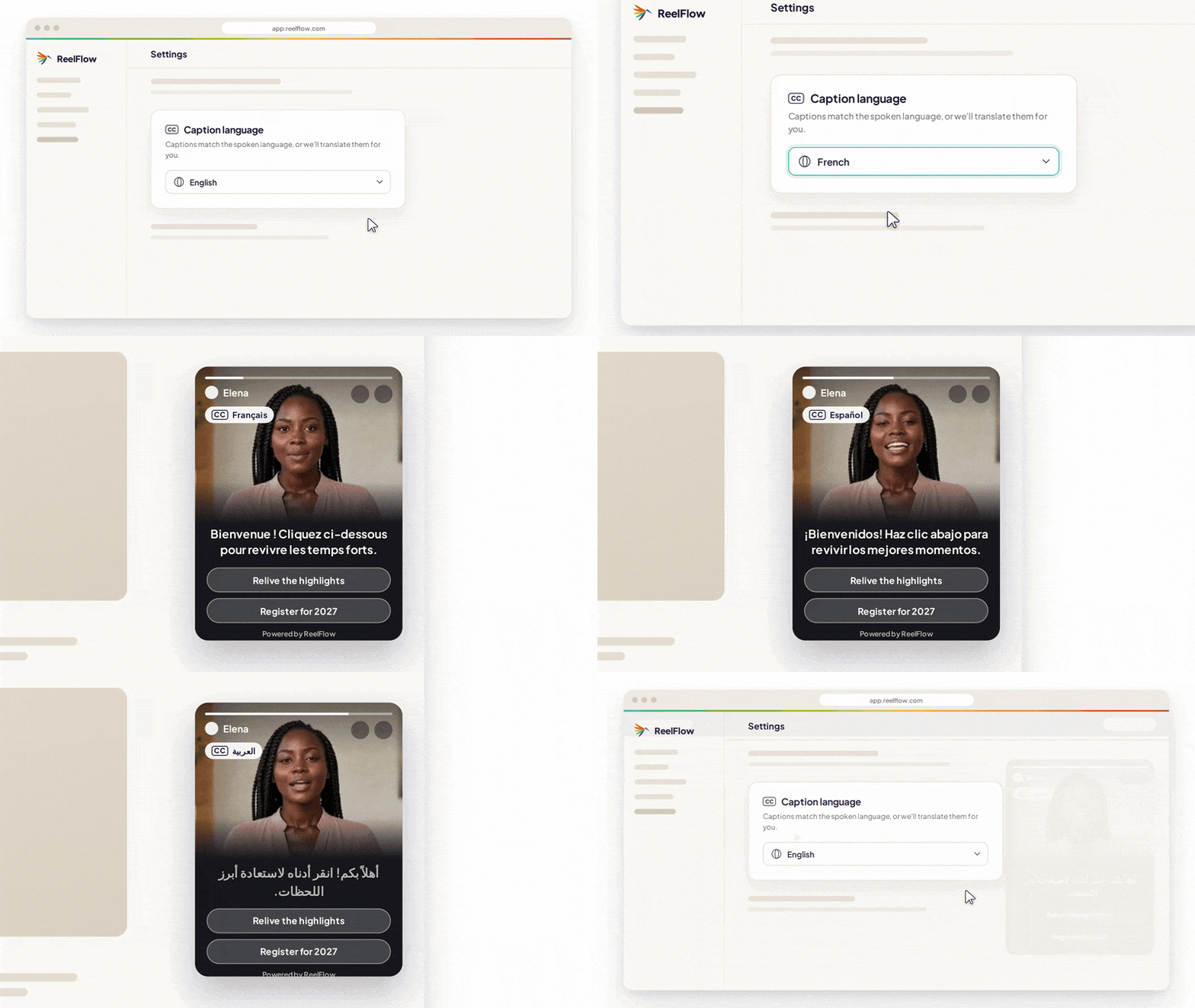


In 2026, the most successful event brands aren't just selling "tickets to a trade show" - they are building year-round industry communities. But, in an era of AI-generated content, a static site is no longer enough to win trust. It must become a year-round engine for trust and buyer enablement.
<iframe src="https://www.veed.io/embed/174d6f8a-6ad0-4d06-9ce2-761035e99e09?watermark=0&color=&sharing=0&title=0" width="744" height="504" frameborder="0" title="ASP Session - Intro Clip" webkitallowfullscreen mozallowfullscreen allowfullscreen></iframe>
Key Takeaways
- The 365-Day Reality: Moving away from "event-only" cycles to maintain search authority and buyer interest all year round.
- The Trust Gap: Buyers are increasingly sceptical of faceless content and crave authentic human connection.
- AEO and SEO: AI now synthesises your site content for researchers, specificity matters.
- Content as a Digital Asset: Past event content is hidden gold, not clutter.
- Human-First Navigation: Guide visitors based on intent rather than forcing rigid menu structures.
1. The Death of the Digital Brochure
<iframe src="https://www.veed.io/embed/a5ec4559-fc75-4977-a6ab-23cfac8e3d1f?watermark=0&color=&sharing=0&title=0" width="744" height="504" frameborder="0" title="ASP Session - Death of Digital Brochure" webkitallowfullscreen mozallowfullscreen allowfullscreen></iframe>
Historically, many event websites have been static brochures designed solely to drive registration. Organisers ramp up content and traffic before the event, then once it’s over, traffic falls off a cliff, content is deleted, and the site goes into stasis. That cycle repeats year after year.
Modern buyers, however, visit a site 30+ times before becoming a lead. If your site does not offer value throughout the year, you're missing a crucial element of your marketing strategy.
Key Takeaway: A website should be a research tool that enables buyers, not just a registration portal.
2. Stop Deleting Your Hidden Gold
<iframe src="https://www.veed.io/embed/843f75d9-305f-45ee-9b90-e52056fde526?watermark=0&color=&sharing=0&title=0" width="744" height="504" frameborder="0" title="ASP Session" webkitallowfullscreen mozallowfullscreen allowfullscreen></iframe>
A common mistake in the event industry is deleting past speaker pages once a show is over.
Speaker pages are hidden gold. People search for those individuals all year round. Removing those pages destroys search authority and year-round discoverability.
Instead, archive them. Create a “Past Speakers” library.
Key Takeaway: Archived content builds cumulative search equity and long-term traffic.
3. The On-Site Digital Concierge
<iframe src="https://www.veed.io/embed/c44f6b59-54e0-4aa8-a2c2-c59282a5bd9b?watermark=0&color=&sharing=0&title=0" width="744" height="504" frameborder="0" title="Copy of ASP Session - Full" webkitallowfullscreen mozallowfullscreen allowfullscreen></iframe>
The homepage is often the most challenging part of an event website because it must cater to every audience segment at once, from attendees to sponsors. Forcing these diverse visitors to hunt through rigid menus often results in high bounce rates as they struggle to find the specific details they need. Instead of leaving them in a "digital maze," use interactive video to act as an on-site concierge that greets visitors and routes them based on their intent. This approach allows you to immediately distinguish between a new researcher, a returning attendee, or an exhibitor, ensuring they get off the homepage and into relevant content faster.
Key Takeaway: Helping visitors get into tailored content pathways quickly reduces the risk of disengagement and significantly increases time on site.
4. Transitioning to Answer Engine Optimisation (AEO)
<iframe src="https://www.veed.io/embed/4d99be69-aa5d-4b1c-b006-28240f3ac1da?watermark=0&color=&sharing=0&title=0" width="744" height="504" frameborder="0" title="ASP Session - AEO" webkitallowfullscreen mozallowfullscreen allowfullscreen></iframe>
AI search is not fundamentally different from traditional SEO – it is an evolution of it. Users now ask highly specific, conversational queries. AI tools synthesise answers rather than simply presenting links.If your site does not explicitly cover subtopics, the AI will find someone else who does. Worse, if it cannot find information, it may hallucinate.
But, at the same time, websites are having an identity crisis. Are we building for bots and LLMs, or for humans landing on the page?
Search engines and AI models need structured, explicit information. Humans need clarity, relevance and trust signals. Optimising purely for one at the expense of the other leads to declining performance.
Key Takeaway: Success requires serving machine intelligence for discovery and human emotion for conversion.
5. Bridging the AI-Human Trust Gap
<iframe src="https://www.veed.io/embed/96e0db06-022c-47dc-a2a1-b19ee6ebe6da?watermark=0&color=&sharing=0&title=0" width="744" height="504" frameborder="0" title="ASP Session - Clip" webkitallowfullscreen mozallowfullscreen allowfullscreen></iframe>
Modern event websites face a growing identity crisis: the need to structure content for AI-driven search engines (AEO) while simultaneously building trust with skeptical human researchers. In an age where synthetic, AI-generated "slop" is flooding digital channels, event organisers must prioritise authentic human connection. By featuring short-form video of founders, subject matter experts, and previous speakers, organisers can provide the reassurance and expert guidance that automated tools and static text simply cannot match.
Key Takeaway: Authenticity is the only way to cut through the noise of AI-generated content; human-led video accelerates trust and qualifies attendees faster than a static brochure ever could.
6. Engagement as a Leading Indicator
<iframe src="https://www.veed.io/embed/0e498192-fadf-4dd7-9e6a-29d5cc1e51ee?watermark=0&color=&sharing=0&title=0" width="744" height="504" frameborder="0" title="Copy of ASP Session - Full" webkitallowfullscreen mozallowfullscreen allowfullscreen></iframe>
If someone spends more time understanding your event, exploring exhibitors, watching speaker previews, or navigating pathways relevant to them, they are moving closer to conversion, even if that conversion happens months later. Conversion (outside of B2C) is rarely linear. A visitor might first discover your event 12 months before it takes place. They might return five, ten, fifteen times before they register.
Engagement is what compounds over that journey.
Key Takeaway: Lower bounce rates and deeper engagement are early signals of future revenue – but only if you measure what actually matters.
Final Thoughts
The role of the B2B event website has evolved. It is no longer a seasonal brochure tied to a calendar date. It is a multi-pathway, year-round enablement platform.
The opportunity lies in:
- Preserving and compounding content for year-round discovery
- Structuring information for AI discovery.
- Bringing authentic human presence to the surface.
This is a strategic shift from campaign bursts to continuous authority, from registration portals to trust engines, from traffic spikes to sustained momentum.