

<iframe width="560" height="315" src="https://www.youtube.com/embed/oezgiKlY56A?si=PFv4VEchvrbuKwwO" title="YouTube video player" frameborder="0" allow="accelerometer; autoplay; clipboard-write; encrypted-media; gyroscope; picture-in-picture; web-share" referrerpolicy="strict-origin-when-cross-origin" allowfullscreen></iframe>
Key Takeaways
- In a world where most buyers research anonymously, winning the deal happens long before the form is filled - it is won by being the most helpful, human guide during the silent research phase.
- A successful B2B website focuses on "decision enablement" by answering the buyer's most pressing questions before asking for anything in return.
- Trust is built through helpfulness without a transaction. By leading with human-led stories and solving the buyer's problems before asking for their data, you become a guide in the "Dark Funnel" rather than just another vendor in the noise.
- Friction is caused by building websites for search engines and lead capture instead of buyer enablement; to fix this, you can replace faceless corporate jargon with authentic human video that helps the "silent majority" make decisions on their own terms.
- Authenticity trumps production value. To engage the modern B2B buyer, ditch the corporate polish and the long intros in favour of raw, human-led video that delivers value in the first few seconds.
- To stay visible and relevant, marketing leaders must pivot from trying to "hack" algorithms to mastering the fundamentals: building high-authority, well-structured sites that provide the instant, credible, and human-led answers that buyers have come to expect from AI interactions.
- Buyer-first marketing begins with radical empathy. By replacing internal jargon with the actual language of your customers and providing human-led video guidance on complex topics like pricing, you transition from a "conversion trap" to a "decision enablement" engine.
Part 1: Why is the traditional funnel no longer an accurate model, and what should replace it? Are there parts of the funnel that still work?
<iframe width="560" height="315" src="https://www.youtube.com/embed/KejvZImqDlE?si=bx8y9nIajL1By2Gw" title="YouTube video player" frameborder="0" allow="accelerometer; autoplay; clipboard-write; encrypted-media; gyroscope; picture-in-picture; web-share" referrerpolicy="strict-origin-when-cross-origin" allowfullscreen></iframe>
The traditional linear funnel is dead, replaced by a non-linear "bowl of spaghetti" journey where buyers spend the vast majority of their time researching anonymously. The modern B2B website must pivot from being a static "conversion trap" to a human-led "decision enablement" engine.
Key Takeaway: Winning the deal happens long before the form is filled - it is won by being the most helpful, human guide during the silent research phase.
Part 2: If most buying decisions are made before talking to sales, what does that change about the role of marketing?
<iframe width="560" height="315" src="https://www.youtube.com/embed/_XXl0U9rHfE?si=bpAKe_I1x_0fSZvY" title="YouTube video player" frameborder="0" allow="accelerometer; autoplay; clipboard-write; encrypted-media; gyroscope; picture-in-picture; web-share" referrerpolicy="strict-origin-when-cross-origin" allowfullscreen></iframe>
Marketing is no longer just a "lead generation function" focused on capturing contact details. It must become a "decision enablement function." Its primary job is to provide the clarity and information buyers need to build internal consensus and make a decision while they are still anonymous.
Key Takeaway: Most buyers have a shortlist of vendors before they raise their hand to talk to sales. Marketers must ensure that their product or service is on that day one shortlist by answering the questions our customers have, before they even ask those questions.
Part 3: How can brands build trust in the early, invisible stages of the buying journey?
<iframe width="560" height="315" src="https://www.youtube.com/embed/onvL25u6JDU?si=YlQd4Mik49hp7uSg" title="YouTube video player" frameborder="0" allow="accelerometer; autoplay; clipboard-write; encrypted-media; gyroscope; picture-in-picture; web-share" referrerpolicy="strict-origin-when-cross-origin" allowfullscreen></iframe>
To build trust in the early, invisible stages of the journey, brands must pivot from "capturing" buyers to "enabling" them. This begins with radical helpfulness - providing high-value, educational content and peer validation without demanding a form-fill or a phone call in exchange. Trust is established when a buyer feels understood and safe, rather than pressured to convert before they are ready.
Marketing leaders often undermine this trust by defaulting to product features, technical acronyms, and "corporate polish" too early. Instead, the focus should be on what the product enables the buyer to do, delivered through the voices of real people - founders, subject matter experts, and the C-suite. Moving from faceless brand messaging to employee-generated content provides the human connection and credibility that modern buyers require to put a vendor on their shortlist.
Key Takeaway: Trust is built through helpfulness without a transaction. By leading with human-led stories and solving the buyer's problems before asking for their data, you become a guide in the "Dark Funnel" rather than just another vendor in the noise.
Part 4: What are the biggest friction points buyers face on B2B websites and how can these be fixed?
<iframe width="560" height="315" src="https://www.youtube.com/embed/Cy1uigSPOWQ?si=xamfwTz0ba59wGPE" title="YouTube video player" frameborder="0" allow="accelerometer; autoplay; clipboard-write; encrypted-media; gyroscope; picture-in-picture; web-share" referrerpolicy="strict-origin-when-cross-origin" allowfullscreen></iframe>
The biggest friction points are static, text-heavy websites that act as "billboards" rather than guides, forcing buyers into a "conversion trap" of forms and gates.
Key Takeaway: Friction is caused by building websites for search engines and lead capture instead of buyer enablement; to fix this, you can replace faceless corporate jargon with authentic human video that helps the "silent majority" make decisions on their own terms.
Part 5: What are the must-have elements of a website that truly enables a buyer - not just captures their attention?
<iframe width="560" height="315" src="https://www.youtube.com/embed/YHCQOynrVeU?si=gHwZS_1cWt-s7N3M" title="YouTube video player" frameborder="0" allow="accelerometer; autoplay; clipboard-write; encrypted-media; gyroscope; picture-in-picture; web-share" referrerpolicy="strict-origin-when-cross-origin" allowfullscreen></iframe>
To truly enable a buyer rather than just capturing their attention, a website must prioritise clarity and autonomy over lead capture. Essential elements include clear positioning and plain language that replaces industry jargon and acronyms with the buyer's own vocabulary. Instead of a forced sales conversation, the site should offer a self-serve, adaptive experience that allows visitors to "choose their own adventure" based on their specific stage in the journey. This human-centric approach is underpinned by short-form video featuring real people and authentic stories, which build the human connection necessary for trust.
Key Takeaway:A successful B2B website focuses on "decision enablement" by answering the buyer's most pressing questions before asking for anything in return.
Part 6: Where does video provide the most value in the modern B2B journey?
<iframe width="560" height="315" src="https://www.youtube.com/embed/cn5UbAN9G7c?si=wk5Z95pogKUlaqjj" title="YouTube video player" frameborder="0" allow="accelerometer; autoplay; clipboard-write; encrypted-media; gyroscope; picture-in-picture; web-share" referrerpolicy="strict-origin-when-cross-origin" allowfullscreen></iframe>
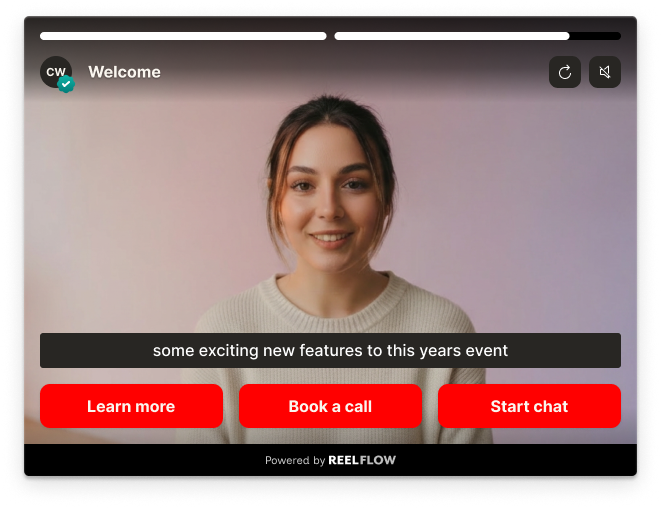
Video builds trust faster than any other format, serving as the closest digital alternative to a live event for forming genuine connections. While short-form video is now the preferred way to consume information, a strategic gap remains: high-performing social clips often lead back to static, text-heavy websites. To maintain momentum, we must bridge this gap by bringing that same human-to-human experience directly onto the website.
Key Takeaway: In moments of buyer uncertainty, video is the most effective tool for building immediate trust. Because buyers form a first impression within seconds, using authentic, real people - rather than synthetic AI - is the key to passing their "trust test" and keeping them engaged.
Part 7: What makes a video experience truly ‘buyer-enabled’ versus just another content piece?
<iframe width="560" height="315" src="https://www.youtube.com/embed/Qb3u9hnb50Y?si=1CTwshjQOj1_c9CF" title="YouTube video player" frameborder="0" allow="accelerometer; autoplay; clipboard-write; encrypted-media; gyroscope; picture-in-picture; web-share" referrerpolicy="strict-origin-when-cross-origin" allowfullscreen></iframe>
The era of highly polished, over-produced corporate video is over. You no longer need to invest thousands or hire a full production crew to create content that resonates. In today's B2B landscape, short-form, human-led video is the format that wins.
By leveraging real people from across your business, you build a level of authenticity and brand identity that a faceless corporate entity simply cannot match. The goal is simple: help the visitor learn, build trust, and move naturally to the next step in their journey. We must remember that even in B2B, we are humans selling to humans.
To be effective, your video must get to the point and answer the buyer's question immediately. Look at your content critically - if you cut the entire intro, would your point still be clear? If the answer is yes, get rid of it. Modern buyers don't have the time or patience to sit through long, generic introductions.
Key Takeaway: Authenticity trumps production value. To engage the modern B2B buyer, ditch the corporate polish and the long intros in favour of raw, human-led video that delivers value in the first few seconds.
Part 8: How is AI reshaping top-of-funnel search, and what should marketing leaders be doing to stay visible?
<iframe width="560" height="315" src="https://www.youtube.com/embed/MALaZGfAvPQ?si=T36UCrH6_ei4i0V3" title="YouTube video player" frameborder="0" allow="accelerometer; autoplay; clipboard-write; encrypted-media; gyroscope; picture-in-picture; web-share" referrerpolicy="strict-origin-when-cross-origin" allowfullscreen></iframe>
AI is fundamentally reshaping the top of the funnel as buyers increasingly initiate research within LLMs rather than traditional search engines. This shift means much of the "long-tail" educational traffic that previously landed on B2B websites is now being captured by AI.
However, this creates a significant shift in visitor quality: by the time a buyer does land on your site, they possess much higher intent. Because they have already conducted preliminary research via AI, their arrival on your domain signals they are further along in their journey and ready for deeper engagement.
Key Takeaway: To stay visible and relevant, marketing leaders must pivot from trying to "hack" algorithms to mastering the fundamentals: building high-authority, well-structured sites that provide the instant, credible, and human-led answers that buyers have come to expect from AI interactions.
Part 9: If a marketing leader is starting from scratch, what’s one small change they can make tomorrow to move toward buyer-first marketing?
<iframe width="560" height="315" src="https://www.youtube.com/embed/9GY1MQi4VvQ?si=94IvwDsyfm0qmVOx" title="YouTube video player" frameborder="0" allow="accelerometer; autoplay; clipboard-write; encrypted-media; gyroscope; picture-in-picture; web-share" referrerpolicy="strict-origin-when-cross-origin" allowfullscreen></iframe>
To move toward buyer-first marketing starting tomorrow, the single most impactful change is to stop guessing and start listening. Begin by mining your sales transcripts to identify the exact language, questions, and stories that resonate with your customers, then use these insights to build detailed personas within an LLM to guide your content. For an immediate win, identify your most complex asset—usually the pricing page—and record your best salesperson explaining it exactly as they would on a discovery call. Placing that authentic, human-led video directly on the pricing page provides instant clarity and builds trust during a critical stage of the buyer's research.
Key Takeaway: Buyer-first marketing begins with radical empathy. By replacing internal jargon with the actual language of your customers and providing human-led video guidance on complex topics like pricing, you transition from a "conversion trap" to a "decision enablement" engine.
Final Thoughts
The "Conversion Trap" has forced many B2B brands to prioritize form fills over actual buyer enablement. However, as the data indicates, the brands that win in 2026 will be those that lower the barrier to information and build trust through authentic, human-led explanation. Whether you are looking to humanize your brand or simplify a complex product narrative, the goal remains the same: give your buyers the autonomy they want and the guidance they need. The technology to do this effectively now exists - the only question is whether your website is ready to evolve.